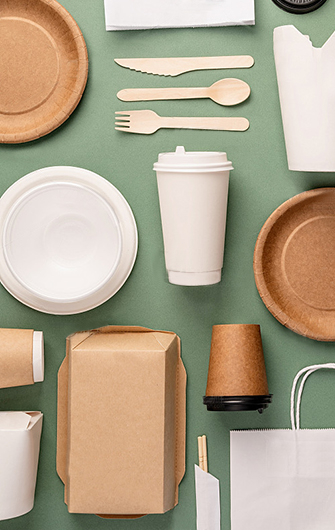
1. Compostable plastic cups are different from biodegradable plastic cups
The terms compostable and biodegradable are often used interchangeably and inaccurately. Although both are excellent solutions for traditional plastics, their decomposition methods are quite different.
Biodegradable plastic cups decompose anaerobicly in conventional landfills, and there are microorganisms, and the time range for the complete decomposition of the material is usually different. The
compostable plastic cups refer to a material that can be decomposed into carbon dioxide, water and biomass at the same speed as cellulose when placed in an industrial composting facility. Compostable plastic must also be broken down in the compost and become indistinguishable. This means that compostable plastics have the ability to support plant growth as they decompose.
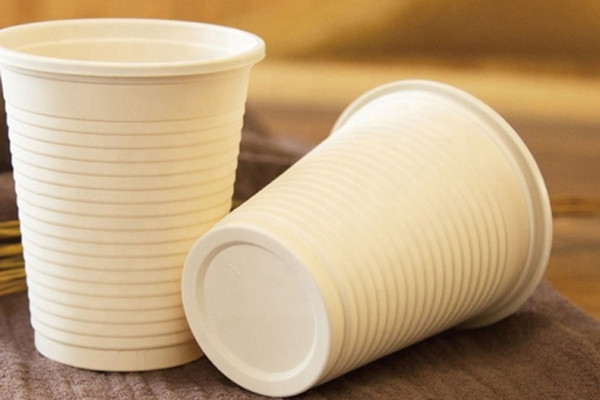 2.Compostable plastics are derived from renewable materials
Compostable plastic raw materials are derived from renewable materials such as starch (corn, potato and tapioca), cellulose, soy protein and lactic acid. When composted in industrial composting facilities, these materials can reduce energy consumption and decompose back to carbon dioxide, water or biomass.
3.How does compostable plastic decompose?
The Composting Committee explained that compostable plastics “degrade through biological processes during the composting process to produce carbon dioxide, water, inorganic compounds, and biomass at a rate consistent with other known compostable materials, without leaving any visible and distinguishable materials. Or toxic residue". It should be noted that compostable plastics need to be processed in industrial composting facilities, otherwise they will not decompose on land or in water.
4.How long does it take for the compostable plastic to completely degrade?
In commercial composting facilities, compostable plastics have perfect conditions and can be degraded quickly and assuredly. Composting facilities provide a higher temperature, allowing effective degradation within about 90-180 days, and comply with international standards, requiring materials to decompose at least 60% within 180 days to be worthy of compostable status.
5. What do compostable plastics need to degrade?
According to the US Environmental Protection Agency, “compost uses microorganisms, heat and humidity to produce carbon dioxide, water, inorganic compounds, and biomass, and its characteristics are similar to the rest of the compost product.” With these characteristics, the item will decompose and can be used to support plant growth. These conditions only exist in commercial and industrial composting facilities.
6. If the product is compostable, can I put it in my home compost?
can not. Compostable plastics can only be decomposed in industrial and commercial composting facilities, where conditions are accurately measured to ensure a complete and rapid decomposition process. Many cities have established residential compost collection programs to efficiently and responsibly dispose of compostable items.
Hyde Environmental Technology Co., Ltd. is an enterprise specializing in the integration of production and sales of customized disposable biodegradable products. The company has advanced paper cup production lines, skilled technical workers and efficient mechanized assembly lines. In addition, the company also provides custom design services for
compostable paper cups. They have the same properties as
compostable plastic cups and can guarantee rapid degradation. We have been designing products that satisfy our customers with professional technology.
Ebony Hawkins
Food Packaging R&d Manager
Engaged in research and development of paper products for many years, good at product analysis and positioning
Click to contact me

 Paper Package
 Paper Package
 Biodegradable Tableware


 5034
5034 8
8





 (Saudi Arabia) Submit Demand 45 Minutes Ago
 (Australia) Submit Demand 25 Minutes Ago
 (United Kingdom) Submit Demand 36 Minutes Ago
 (Sweden) Submit Demand 15 Minutes Ago