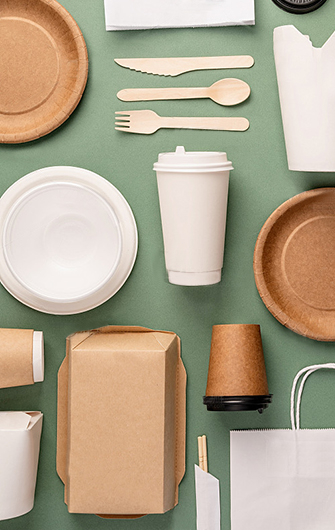
In this article, we'll find out how
compostable pla forks and
bagasse lunch boxes can benefit the environment.Eight percent of the world's oil production now goes into plastic, which makes up at least 25 percent of the average landfill after use. Reducing and redirecting materials from landfills is a major goal of environmental reform. Our compostable pla forks and
bagasse lunch boxes are made from renewable resources with minimal long-term impact on the environment, thereby protecting our natural resources for future generations.
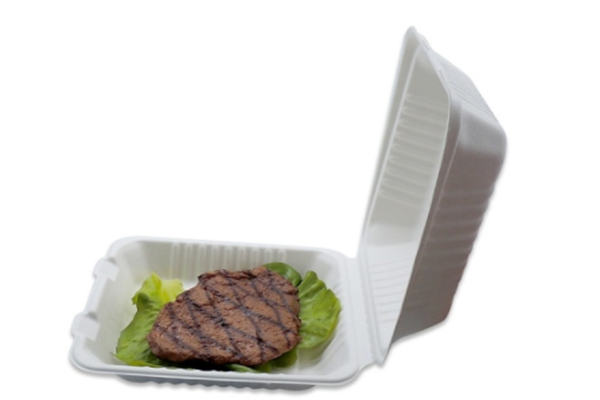 Compostable pla forks and bagasse lunch boxes
PLA stands for polylactic acid, a resin made from corn starch. PLA is used to make transparent compostable containers and PLA linings are used as impermeable linings in cups and containers. PLA is biodegradable and can be fully composted. Compared to traditional oil-based plastics, the
compostable PLA fork uses 65% less energy to produce, produces 68% less greenhouse gases and is free of toxins.
Bagasse is a natural by-product of sugarcane refining. Bagasse is the fiber left after the cane stem is crushed to extract juice. Bagasse pulp requires minimal processing and elemental chlorine free bleaching to transform it into biodegradable and compostable high-strength woven paper.
Bagasse lunch boxes are more energy-efficient to produce than pulp and paper or polystyrene made from petroleum.
Benefits to the environment
Rich soil
Compostable products have the ability to help poor soil regenerate. The composting process encourages the production of beneficial microbes that break down organic matter to produce humus. Humus -- a nutrient-rich substance -- increases the amount of nutrients in the soil and helps it retain water. Composting has also been shown to inhibit plant pests and diseases, reduce or eliminate the need for chemical fertilizers, and improve crop yields.
Helps clean up contaminated soil
The composting process of the product has been shown to absorb odors and treat semi-volatile and volatile organic compounds, including heating fuels and explosives. It has also been shown to bind heavy metals and prevent them from migrating to water resources or being absorbed by plants. The composting process degrades and, in some cases, completely removes wood preservatives, pesticides and chlorinated and non-chlorinated hydrocarbons from the contaminated soil.
Organic material transferred from landfills ultimately avoids the production of methane and leachate formulations in landfills. Composting prevents contaminants in stormwater runoff from reaching surface water resources. Composting has also been shown to prevent erosion and siltation on levees parallel to creeks, lakes and rivers, and to prevent erosion and turf loss on roadsides, hillsides, playgrounds and golf courses.
Can bring economic benefits
Using compostable products reduces the need for water, fertilizer and pesticides. It is a marketable commodity and a low-cost alternative to standard landfill mulch and artificial soil amendments. Compostable products also extend the life of municipal landfills by diverting organic materials from landfills and offer a less costly alternative to traditional methods of remediation of contaminated soil.
For commercial or corporate users advocating compostable materials, the cost of sending these
compostable pla forks and
bagasse lunch boxes to composting facilities is lower than the cost of sending waste to landfills. In addition, many companies are able to buy back humus from composters at a low cost. Composting at home can reduce your waste transport costs and produce your own rich soil humus for gardening and landscaping. Contact us online now for quality
compostable PLA cutlery and
bagasse lunch box.
Anne Dakan
Market research expert
Combined with real product experience dialysis consumer needs
Click to contact me

 Paper Package
 Paper Package
 Biodegradable Tableware


 3164
3164 15
15





 (Saudi Arabia) Submit Demand 45 Minutes Ago
 (Australia) Submit Demand 25 Minutes Ago
 (United Kingdom) Submit Demand 36 Minutes Ago
 (Sweden) Submit Demand 15 Minutes Ago