Drinking coffee should be a fun and exciting social activity. But coffee cups can contaminate or improve the overall experience. Drinking coffee may be your most regrettable moment because of the coating on your cup. If you're a coffee supplier, making
compostable coffee cups can help your entire community enjoy coffee safely and responsibly. Until recently, coffee cups were polyethylene coated. Despite the known risks, some businesses are sticking with these cups. Today, safe
compostable coffee cups include cornstarch or bagasse coatings.
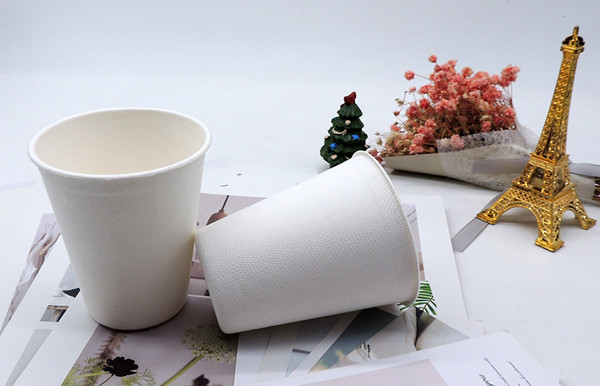 Compostable coffee cups: cornstarch and bagasse cups
For the sake of both the environment and human safety, this
compostable coffee cup seems to be the best choice. If you're looking for a recyclable friend for your latte, corn starch and bagasse cups are right there, so let's start with
compostable paper cups coated with corn starch. The unsustainability of plastics has prompted some manufacturers to look for sustainable options. Research leads to renewable materials as the best and most sustainable alternative.
In the paper cup industry, cups are known as polylactic acid cups or PLA. Corn starch comes from fast-growing plants such as sugar beets, wheat and corn. So manufacturers separate sugar from crops to make PLA, which is then processed into PLA films for compostable paper cups. In addition, PLA products are classified as renewable and compostable. Their raw materials are available all over the world. The PLA can also be decomposed within 45 days in an industrial composting facility. So if you have a compost site, compostable paper cups can degrade there, too. However, you must bury the cup deep enough to ensure that the compost is hot.
Many factors contribute to environmental degradation, but few cause the backlash they deserve. Bagasse is burned if it is not processed into pulp. This causes carbon emissions and pollutes the air. Because bagasse could be a revelation for paper cup makers. It displaces the source of wood in paper making. Instead of discarding cane pulp, it is made into food packaging items. For this reason, processing syrups into packaged products is another eco-friendly alternative to plastic, which uses less energy and costs to produce.
Environmental benefits of corn starch and bagasse
Corn starch and bagasse are now taking over green packaging. Green businesses are now awash with compostable materials. From paper cups to plates to sleeves, these materials are all the rage now. In addition, we are now seeing the disappearance of plastic cups.
Compostable coffee cups are your choice, and most notably as you sip guileless coffee, knowing that you're doing your part to help the planet really does make you feel good, knowing that your coffee cup will eventually become compost.
Beyond that, you can be sure that your coffee binge is one way to help reduce your carbon footprint. However, you are responsible for what you do with your used coffee cups. Most of the time, standard recycling bins send coffee cups to landfills. However, there are systems that can help reduce paper cup waste.
Hydepackage Disposable Sugarcane Cups Videos From YouTube
With a coffee cup, there are only two ways you can handle it. You can either put it in the correct recycling bin or set it aside for composting. But please don't throw it in any other street bin. As long as you're using
compostable coffee cups, there's always a way to get rid of them safely! Using eco-friendly coffee cups is not only good for the environment, it's also good for your business. Protecting your customers' products ensures your reputation. With compostable coffee cups, you can conserve resources and protect the environment. Contact us for e
co-friendly disposable coffee cups.
Laura Parsons
Product tester
Explore the skills and knowledge of the paper products industry for you
Click to contact me

 Paper Package
 Paper Package
 Biodegradable Tableware


 2751
2751 18
18





 (Saudi Arabia) Submit Demand 45 Minutes Ago
 (Australia) Submit Demand 25 Minutes Ago
 (United Kingdom) Submit Demand 36 Minutes Ago
 (Sweden) Submit Demand 15 Minutes Ago